Providing Safe and Effective NeuroStar Advanced TMS Therapy
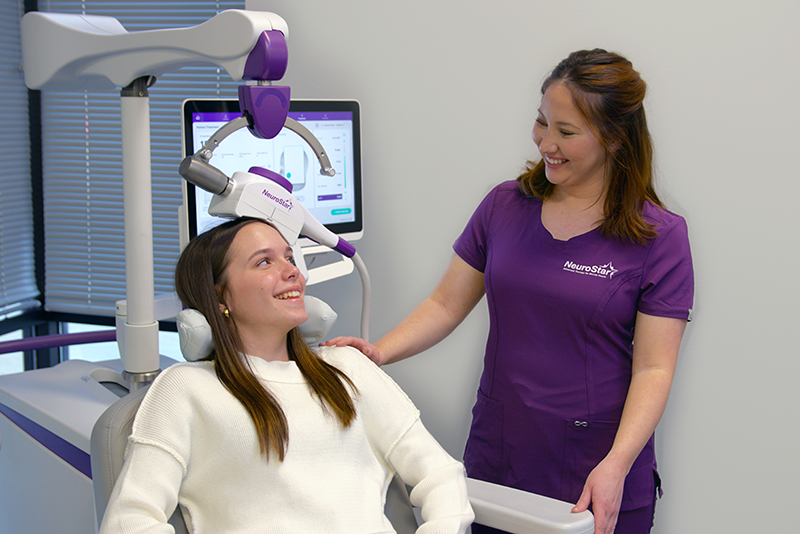
At Lakeview TMS Center, we offer NeuroStar® Advanced TMS Therapy, an FDA-cleared, non-invasive treatment for:
Depression
Anxious depression
Obsessive-compulsive disorder (OCD)
TMS uses targeted magnetic pulses to stimulate brain networks involved in mood regulation and is clinically proven to improve symptoms in patients who have not responded to antidepressant medications—without the common side effects associated with medication.
NeuroStar TMS Therapy is:
FDA-cleared and clinically proven
Non-invasive and drug-free
Safe and well-tolerated
Free of long-term systemic side effects
For patients who prefer or need a drug-free treatment.
TMS is also FDA-cleared for the Treatment of OCD and Anxious Depression
NeuroStar Advanced TMS Therapy is The Right Choice
Transcranial magnetic stimulation (TMS) uses a targeted pulsed magnetic field, similar to what is used in an MRI (magnetic resonance imaging) machine. While the patient is awake and alert, NeuroStar Advanced TMS Therapy stimulates areas of the brain that are underactive in depression.
“Such a blessing for me and everyone who loves me to see improvements start here, and I am still getting better! For me, it has been an answer to prayers!”
HG
“By the end of the TMS treatment, things were better than I could have imagined. After that sixth week, I was so excited that my life was starting to resume.”